When it comes to creating a warm and comfortable home, underfloor heating has become one of the most sought-after modern solutions. Instead of bulky radiators or noisy heaters, these systems work quietly and invisibly beneath your floors, delivering even, radiant heat throughout the room. But when you’re weighing up your options, you’ll quickly come across the debate: underfloor heating mats vs water systems.
Both options deliver cozy, efficient warmth, but they work differently, and each comes with unique advantages and disadvantages. If you’re a homeowner in Malta considering a renovation or new build, understanding the real differences between underfloor heating mats vs water systems is crucial.
In this guide, we’ll break down how each system works, compare their costs in euros, highlight their pros and cons, and ultimately help you decide which solution makes sense for your home.
What’s the Difference Between Underfloor Heating Mats vs Water Systems?
Let’s start by defining what we’re actually comparing.
Underfloor Heating Mats vs Water Systems
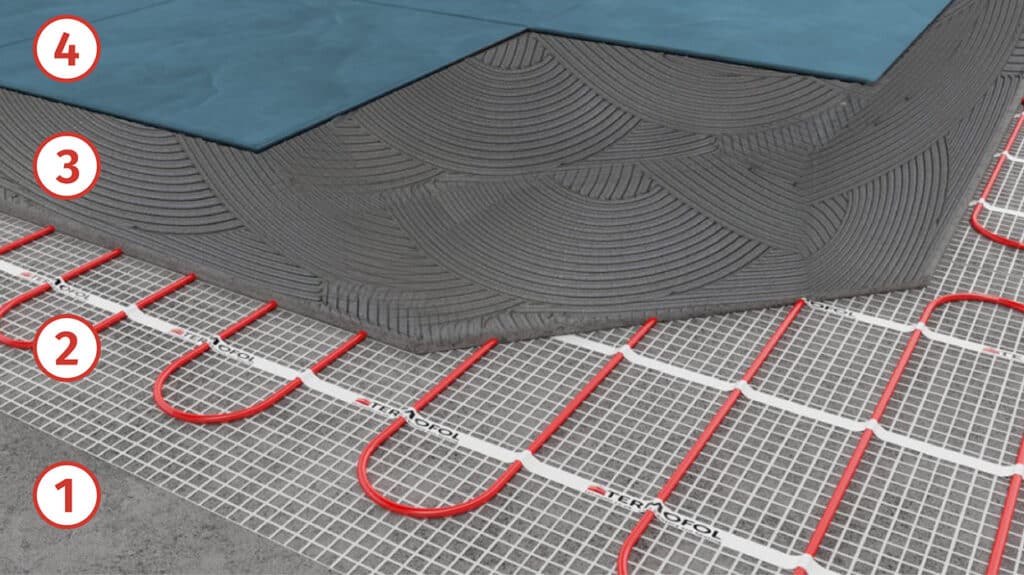
Underfloor heating mats (also called electric underfloor heating) use thin electrical cables embedded in mesh mats. These are installed directly beneath tiles or flooring. When powered, they generate heat and radiate warmth upward through the floor. They are fast to install, ideal for smaller areas, and controlled by thermostats.
Water systems (also known as hydronic underfloor heating) use a network of water pipes installed beneath the floor. Warm water circulates through these pipes, heating the floor surface and the room above. These systems are typically connected to a boiler, heat pump, or solar water system.
In short:
- Mats = electricity-based heating
- Water systems = hot water circulation
Both fall under underfloor heating, but they differ significantly in cost, complexity, and suitability depending on the project.
The Pros of Underfloor Heating Mats
When comparing underfloor heating mats vs water systems, electric mats offer several clear advantages, especially for Malta.
1. Quick and Easy Installation
Electric mats are simple and fast to install. They are rolled out over the subfloor and connected to the electrical system. Most small to medium rooms can be completed in a single day.
This makes them ideal for renovations where time and disruption need to be minimized.
2. Lower Upfront Cost
Mats are generally more affordable to install compared to water systems.
Small spaces like bathrooms are particularly cost-effective to upgrade.
3. Ideal for Small Rooms
Electric mats perform best in bathrooms, kitchens, and bedrooms where targeted heating is needed rather than whole-house systems.
4. Low Maintenance
Once installed, mats require virtually no maintenance. There are no pumps, pipes, or water circuits that need servicing.
5. Fast Heat Response
Electric mats typically warm up within 20–40 minutes, making them ideal for daily use in frequently occupied rooms.
The Pros of Water Systems
On the other side of the underfloor heating mats vs water systems comparison, hydronic systems offer their own strengths.
1. Better for Large Areas
Water systems are more efficient for heating entire homes or large open-plan spaces.
2. Lower Running Costs at Scale
Although expensive to install, they can be cheaper to run over time, especially when connected to heat pumps or solar systems.
3. Renewable Energy Compatibility
Hydronic systems integrate well with sustainable energy sources, making them a greener long-term solution.
4. Even Heat Distribution
Water pipes provide consistent and uniform heating across large surfaces.
5. Long Lifespan
When properly installed, water systems can last several decades.
The Cons of Underfloor Heating Mats
- Higher electricity running costs compared to water systems in large spaces
- Not ideal for full-house heating in bigger properties
- Limited efficiency at scale
The Cons of Water Systems
- High installation cost
- Complex and disruptive installation process
- Requires regular maintenance (pumps, boilers, valves)
- Slower heating response time
- Often not cost-efficient for Malta’s mild climate
Which Option Works Best for Malta?
Malta’s climate plays a key role in this decision. Winters are short and mild, and most homes use tiled or stone flooring.
- Bathrooms, kitchens, bedrooms → Electric mats are ideal
- Large villas or full-home systems → Water systems may be suitable
For most Maltese homes, electric underfloor heating mats offer the best balance of cost, speed, and practicality.
Energy Efficiency: Mats vs Water Systems
Electric mats are highly efficient at converting electricity into heat, but running costs depend on electricity prices in Malta.
Water systems are more efficient in large-scale setups and when paired with renewable energy sources, but require higher upfront investment.
Maintenance & Longevity| Underfloor Heating Mats vs Water Systems
Another key factor is what happens after installation.
Mats
- No moving parts
- Minimal maintenance (just thermostat checkups)
- Lifespan: 20+ years
- If a section fails, it can usually be repaired without tearing out the whole floor
Water Systems
- Requires regular boiler/pump servicing
- Potential for leaks or airlocks in the pipes
- Lifespan: 40+ years (with proper maintenance)
- Repairs can be expensive if embedded pipes are damaged
So while water systems can last longer, mats are far simpler and hassle-free once installed.
Common Myths About Underfloor Heating Mats vs Water Systems| Underfloor Heating Mats vs Water Systems
When researching, many people come across myths or half-truths. Let’s clear a few up.
- “Underfloor heating mats are unsafe.”
False. They are fully tested, safe, and regulated for indoor use. - “Water systems can’t be used under tiles.”
False. Both mats and water pipes can work beautifully with tiles, which is why Maltese homes with tiled floors benefit greatly. - “Underfloor heating is too expensive for Malta.”
Not necessarily. While water systems can be costly upfront, mats are affordable for targeted comfort zones. - “It only works in cold climates.”
False. Even in Malta, where winters are short but chilly, having warm tiles underfoot can make a huge difference in comfort.
FAQs: Underfloor Heating Mats vs Water Systems
Q1: Can I install mats or water systems in an existing home?
Yes. Mats are much easier to retrofit during renovations. Water systems are usually best for new builds.
Q2: Do these systems replace radiators entirely?
Mats can serve as a secondary heating source in smaller rooms, while water systems can heat entire homes.
Q3: Do they work with all flooring types?
Yes, but tiles are the best match. They conduct heat quickly and evenly.
Q4: How do I control the temperature?
Both systems use thermostats. Smart thermostats can be integrated for maximum efficiency.
Q5: Which option is better for resale value?
Hydronic systems may add more long-term value in luxury homes, but mats improve comfort and appeal in everyday spaces like bathrooms.
Decision Time: Which One Should You Choose?
If we boil it all down, here’s the decision-making guide:
- Choose Mats If…
- You’re upgrading a bathroom, kitchen, or bedroom
- You want quick installation and lower upfront costs
- You prefer minimal maintenance
- You want a targeted solution for chilly tiled floors
- Choose Water Systems If…
- You’re building a new home or majorly renovating
- You want whole-house heating
- You’re willing to invest heavily upfront for long-term savings
- You have access to renewable energy systems
For Malta’s climate and most typical households, underfloor heating mats are the smart, practical choice.
Final Thoughts
When it comes to underfloor heating mats vs water systems, there is no one-size-fits-all answer. Mats are perfect for small-scale comfort and ease, while water systems are more suited to large projects and long-term investment.
The good news? Both systems will transform your living spaces, bringing comfort and efficiency that old-fashioned radiators can’t match.
If you’re unsure, the best step is to speak with a professional who understands the Maltese climate, home construction, and energy costs.
✅ Contact Us
Ready to bring the comfort of underfloor heating to your home in Malta?
👉 Contact us today and let our experts guide you to the right choice for your project.
🔎 Check Out Our Service
Discover more about our professional installations in Malta here:
👉 Underfloor Heating Mats Malta