Here is the article cleaned, formatted, and ready to publish. Since there were no specific price figures or currency symbols in this draft, the text flows naturally while keeping the entire focus on technical scope, planning, regulations, and site logistics.
The Complete Guide to House Demolition and Site Preparation in Malta
When planning a major redevelopment project, one of the first critical steps property owners face is house demolition and site preparation. Whether you’re tearing down an old structure to build a modern residence or clearing a site for commercial development, understanding the processes and requirements involved is essential.
In Malta, where spatial constraints, building regulations, and urban density vary widely, thorough planning can save you significant time and project delays.
In this guide, we’ll break down everything you need to know about house demolition in Malta—from core technical requirements and unexpected site variables to permits, environmental compliance, and site logistics.
Why Proper Demolition Planning Matters in Malta
Demolition isn’t just about knocking down walls—it forms the foundation for your entire construction timeline and architectural layout.
Demolition in Malta involves strict safety, structural, and environmental guidelines. A proper scope must account for hazardous material handling, heavy machinery access, structural underpinning of adjacent properties, and compliance with local municipal permits.
Key Factors Influencing Demolition Scope and Execution
Every property is unique, which is why demolition requirements vary significantly from one site to another. The primary factors driving the scope include:
-
Structural Size and Footprint: Larger properties require increased machinery deployment, extended operational timelines, and larger labor forces to manage site dismantling safely.
-
Construction Materials: Properties constructed with reinforced concrete slabs or thick traditional Maltese limestone require specialized hydraulic breakers and longer timelines compared to lighter structural builds.
-
Site Accessibility and Logistics: If your property is situated in a narrow street in Valletta, Mdina, or a densely populated village core, getting heavy excavators on site requires careful traffic management, crane hoisting, or manual dismantling techniques.
-
Waste Disposal and Material Separation: Maltese environmental regulations mandate responsible sorting, transport, and disposal of construction debris at licensed facilities.
-
Statutory Permits and Authorizations: Works cannot commence without formal approvals from the Planning Authority (PA) and the Building & Construction Authority (BCA), alongside local council road closure permissions.
Permits and Legal Requirements in Malta
You cannot begin demolition without proper legal clearance. The Maltese government enforces strict regulations surrounding structural safety, dust control, working hours, and environmental impact.
Key Statutory Steps:
-
Planning Authority (PA): Applying for required demolition permits and site redevelopment clearances.
-
Building & Construction Authority (BCA): Submitting a detailed Method Statement and Condition Reports of neighboring properties prior to works.
-
Local Municipal Council: Securing local council permits for street blockages, skip placement, or heavy vehicle machinery deployment.
Warning: Failing to secure the right clearances can lead to immediate stop-work orders and official penalties. Working with licensed contractors ensures all documentation is properly managed and compliant.
Unexpected Site Variables to Plan For
Even with thorough initial site inspections, certain structural conditions only become apparent once work begins:
-
Asbestos or Hazardous Materials: Older structures may contain asbestos in roofing sheets, water tanks, or insulation, requiring specialist hazardous waste removal teams.
-
Utility Disconnections: Electricity (Enemalta), water (WSC), and telecommunications must be officially disconnected and capped prior to structural dismantling.
-
Party Wall Protection: Adjoining historic limestone walls often require careful manual dismantling and structural underpinning to prevent damage to neighboring buildings.
-
Excess Rubble & Sub-Grade Formations: Unforeseen subterranean concrete footings or backfilled voids require additional excavation effort.
The Role of Professional Demolition Contractors
Attempting to manage structural demolition without experienced contractors carries significant legal and physical risks. Professional contractors provide complete operational management, safety oversight, and regulatory compliance.
By partnering with specialists like Kibitec, you ensure:
-
Comprehensive site surveys and structured execution plans.
-
Seamless handling of permit workflows and condition reports.
-
Full safety protocols for workers and surrounding properties.
-
Controlled, efficient project execution using modern, low-vibration equipment.
Waste Management and Environmental Standards
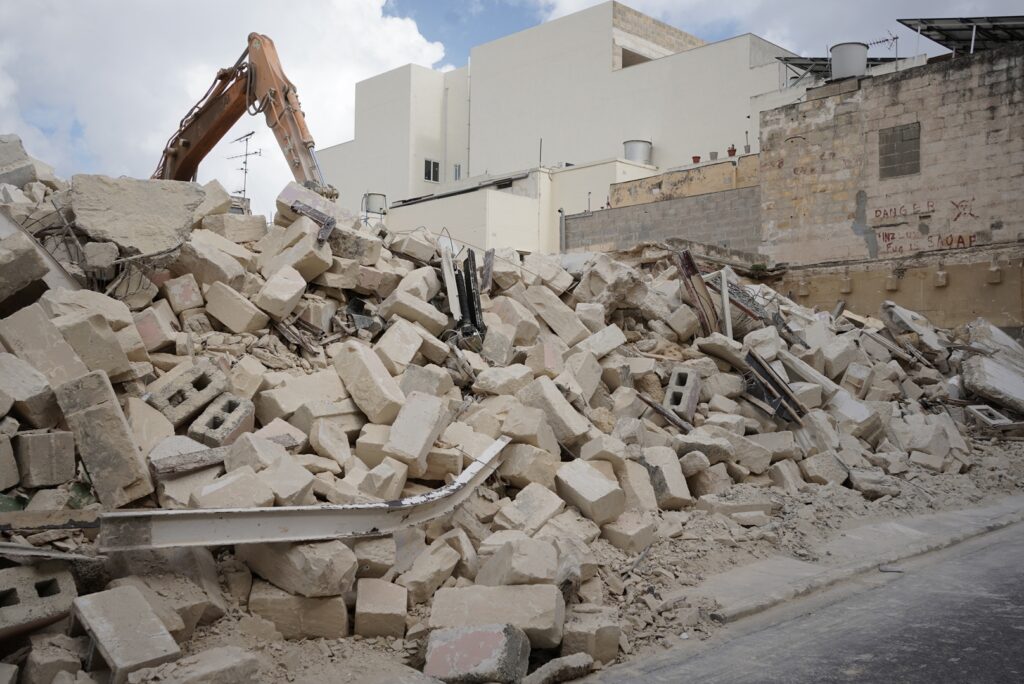
Demolition waste in Malta must be handled strictly according to environmental protection standards. Debris cannot be mixed indiscriminately or dumped illegally.
-
Sorting at Source: Timber, metal, clean stone, and mixed inert waste should be segregated on site wherever possible.
-
Licensed Facilities: All rubble must be transported by licensed waste carriers to designated quarries or recycling sites.
-
Material Salvaging: High-grade Maltese globigerina stone, steel mesh, and timber beams can often be salvaged for reuse or historic restoration projects.
Unique Demolition Challenges in the Maltese Islands
Demolition work in Malta presents distinct logistical conditions compared to continental mainland projects:
| Challenge | Impact on Site Execution | Solution / Approach |
| High Urban Density | Buildings frequently attached on both sides by shared party walls | Manual edge dismantling & protective shoring |
| Narrow Historic Streets | Restricted machinery access and tight turning radiuses | Compact excavators, mini-dumpers & telescopic booms |
| Geological Conditions | Dismantling structures rooted in solid rock slabs | Low-vibration precision breakers to limit ground impact |
Is Structural Demolition the Right Choice for Your Property?
If you are evaluating whether to restore an existing building or demolish and rebuild, consider the long-term utility of the site:
-
Deteriorated Structures: Buildings with severe structural failure, persistent dampness, or non-functional layouts are often better replaced with energy-efficient modern structures.
-
Optimizing Site Footprint: Demolition allows architects to redesign the floor plan from the ground up, incorporating proper thermal insulation, underground garages, and efficient MEP layouts.
Practical Planning Tips for Your Demolition Project
-
Request a Complete Scope Breakdown: Ensure your contractor’s proposal covers labor, machinery, waste haulage, utility coordination, and site clearance.
-
Maintain a Project Contingency: Set aside a flexible buffer in your site timeline to accommodate unexpected site discoveries or weather delays.
-
Plan Utility Disconnections Early: Coordinate with utility providers weeks before demolition starts, as utility retirement schedules can affect start dates.
-
Choose Experience Over Shortcuts: Select contractors based on site safety records, equipment quality, and familiarity with Maltese building codes.
How to Select the Right Contractor in Malta
When evaluating contractors for structural demolition, look for the following qualifications:
-
Local Regulatory Knowledge: Proven experience navigating Planning Authority, BCA, and municipal council requirements.
-
Transparent Execution Plans: Clear, detailed breakdowns of methodology, safety measures, and site logistics.
-
Integrated Waste Handling: Full capability to handle waste loading, transport, and certified dumping.
-
Insurance Coverage: Comprehensive third-party liability insurance protecting neighboring structures and public spaces.
Additional Services Integrated into Demolition Work
Demolition is rarely a standalone step; it is usually paired with broader site preparation works:
-
Site Clearance: Removing vegetation, surface debris, and non-structural elements prior to main works.
-
Excavation: Digging out foundations, basements, or water reservoirs (ġiebja) immediately following structural clearing.
-
Retaining and Shoring: Installing temporary support structures to stabilize neighboring soils and party walls.
Final Thoughts
While house demolition requires careful coordination, it is a vital first step toward transforming your property. By planning thoroughly, adhering to local regulations, and working with experienced professionals, you turn complex structural dismantling into a controlled, safe, and efficient milestone for your project.
Contact Kibitec
Ready to move forward with your demolition or site clearance project in Malta? Reach out to our team at Kibitec for technical guidance and a tailored project consultation.