
What Is Screed? Understanding Floor Screed Types, Applications, and Specifications
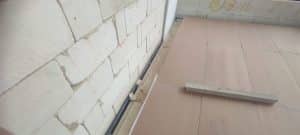
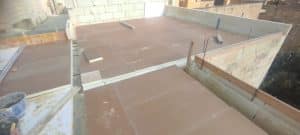
If you are planning a flooring project, you have likely encountered the term screed. Screed is a thin, specialized top layer applied over a concrete subfloor, typically composed of cement and sharp sand. For heavier-duty or industrial applications, a coarser aggregate (6mm to 10mm) is used to enhance impact resistance and load capacity.
Screed covers the structural concrete slab—whether cast in-situ or precast—and can also be applied over acoustic or thermal insulation boards. It is particularly effective for encapsulating and protecting underfloor heating pipework.
The primary purpose of screed is to provide a smooth, flat, and level surface so that final floor finishes—such as tiles, microcement, vinyl, carpet, or floorboards—can be laid securely. As a general industry guideline for surface tolerance, a floor should be leveled across a 3-meter straightedge with a maximum variance of no more than 5mm.
Screed vs. Concrete: Key Differences
While concrete and screed share the same basic ingredients—cement, aggregates, and water—their formulations and purposes differ significantly:
-
Structural Concrete: Uses coarse aggregates and heavy hard-core gravel to maximize structural load strength for foundations, pillars, and primary floor slabs.
-
Floor Screed: Uses fine sand or specialized liquid polymers to achieve a smooth, dense, and workable finish suitable for precision leveling.
Screed is a refined finishing material engineered for flatness, surface integrity, and thermal conductivity rather than structural mass.
Screed Types and Thickness Requirements
Screed can be specified in several key configurations depending on the underlying substrate and building requirements:
-
Bonded Screed: Applied directly onto a prepared concrete subfloor using a bonding slurry or primer. Minimum thickness typically starts at 25mm.
-
Unbonded Screed: Laid over a damp-proof membrane (DPM) or plastic sheeting to isolate the screed from the structural slab.
-
Floating Screed: Applied over an insulating layer or underfloor heating pipes. Requires a minimum thickness of 65mm (or 75mm in high-traffic domestic areas) to ensure flexural strength without cracking.
For demanding applications—such as commercial showrooms or industrial facilities—screed mixes can be reinforced with polypropylene fibres, fine glass strands, or metal mesh to increase tensile strength and prevent shrinkage cracking.
Engineering Tip: Always consult with your structural engineer or building contractor to determine the exact minimum thickness and reinforcement requirements for your site’s specific load requirements.
Project Planning and Screed Delivery in Malta
Determining the exact screed specification for your project depends on several key variables:
-
Total Floor Surface Area and Thickness: Dictates the volume of material required and drying times.
-
Substrate Condition: Determines whether a bonded, unbonded, or floating system is necessary.
-
Final Topcoat Selection: Dictates surface tolerance and drying moisture limits before laying tiles, timber, or microcement.
Delivery and Application Methods
Depending on site access and layout, screed is mixed and placed using tailored logistics:
-
On-Site Mixing & Manual Placement: For smaller or constrained sites, specialized vehicles mix the screed to the exact consistency before depositing it on-site for manual placement and straightedge levelling.
-
Screed Pumping Systems: For larger open-plan developments or upper-floor installations, specialized screed pumps discharge dry or liquid mixes directly to the target area through flexible hoses, providing high volume efficiency and speed.
Final Thoughts
A well-specified and correctly installed screed layer is vital for ensuring the longevity, safety, and flatness of your final flooring finish.

📞 Contact Kibitec
Planning a flooring project or renovation in Malta? Get in touch with our team to discuss your project requirements, technical specifications, and delivery logistics with our construction specialists.