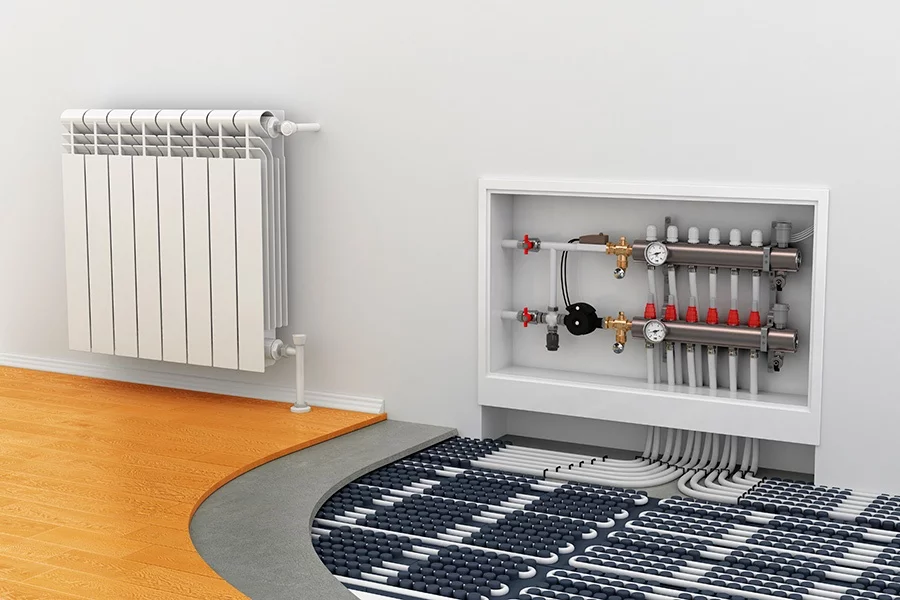
Underfloor heating is becoming increasingly popular in Malta due to its sleek design, energy efficiency, and consistent heat distribution. But here’s the catch: not all flooring types are compatible with this system. Choosing the wrong floor covering can severely impact performance, reduce energy efficiency, and even damage your floor or heating system over time.
If you’ve ever wondered what flooring is not suitable for underfloor heating, you’re in the right place. This post will walk you through the key types of flooring to avoid, the reasons why, and smart alternatives that will help you get the most out of your heating investment.
Let’s dive in!
1. Thick Carpets with Dense Underlay: A Cozy Trap for Heat| What Flooring Is Not Suitable for Underfloor Heating
Many people love the softness and warmth of carpet under their feet. But when it comes to underfloor heating, thick carpets with dense underlay are one of the worst choices you can make.
Why Carpets Don’t Mix Well:
Underfloor heating works by radiating heat upward into the room. However, a thick carpet acts like a thermal insulator—it traps the heat beneath it. That means the system has to work harder and longer to raise the temperature in your space.
In some cases, the floor might even feel lukewarm at best, even though your energy bill keeps rising. In fact, dense carpets can reduce the efficiency of your system by up to 50%.
What to Do Instead:
If you’re determined to use carpet, opt for low-tog options (under 1.5 TOG in total, including underlay). But for optimal performance, we recommend switching to vinyl, engineered wood, or ceramic tiles.
💡 Pro Tip: When in doubt, check with your flooring supplier if their product is compatible with radiant heat systems.
2. Solid Hardwood Flooring: Beautiful But Problematic| What Flooring Is Not Suitable for Underfloor Heating
Wood lovers, take note. While wood is often seen as a premium material, solid hardwood flooring is not suitable for underfloor heating—and here’s why.
The Warping Risk:
Natural wood is sensitive to changes in heat and humidity. When exposed to fluctuating temperatures, solid wood can expand, contract, and even warp. That’s a big problem when you have heat radiating up from below.
The end result? Cracked boards, uneven flooring, and a damaged underfloor system that costs a fortune to fix. And in Malta’s varied humidity levels, the risk is even greater.
What’s a Better Option?
Engineered wood is a much better choice. It looks almost identical to solid hardwood but has a multi-layered construction that holds up much better under heat.
And yes—you can buy it or get the service directly from us at Kibitec.
3. Unbacked Laminate Flooring: Cheap in Price, Expensive in Consequences| What Flooring Is Not Suitable for Underfloor Heating
Laminate flooring is often advertised as a budget-friendly, stylish solution—but beware: not all laminate is made equal, and some versions are definitely not suitable for underfloor heating.
What’s the Issue?
Cheaper or unbacked laminate products are often made with adhesives and composite materials that aren’t designed to withstand long-term heat exposure. Over time, these can delaminate, warp, or emit VOCs (volatile organic compounds)—none of which are safe or efficient.
Also, poorly manufactured laminates might develop air pockets that act as insulation, reducing your heating system’s effectiveness and even damaging the floorboards.
What Should You Use Instead?
Look for laminate floors that are specifically labeled as underfloor heating compatible. They’re often made with stabilizing layers and safer adhesives designed for thermal stability.
Always check for manufacturer certifications and warranties before you buy. And yes—we’ll help you pick the right one. Contact us here: https://kibitec.com/contact-us/
4. Rubber and Vinyl with Low Heat Resistance: A Risky Gamble| What Flooring Is Not Suitable for Underfloor Heating
Another big question we get is whether vinyl or rubber flooring can be used with radiant heating systems. The answer? It depends.
The Problem with Certain Vinyl and Rubber Floors:
While many modern vinyl floors are engineered to work with underfloor heating, some older or cheaper rubber and vinyl products have poor heat resistance. These can soften, discolor, or even emit harmful fumes at higher temperatures.
Even worse, low-grade rubber can degrade and become sticky, damaging your heating cables or mat system in the process.
When Can You Use Them?
Check the maximum heat resistance. The floor should be able to withstand temperatures of at least 27°C without deforming.
Also, avoid installing vinyl or rubber over foil heating mats, which can create hot spots. We strongly recommend using a professional installer to assess compatibility—and you can reach our certified team at Kibitec.
5. Natural Stone Without Proper Insulation: Looks Great, Performs Poorly| What Flooring Is Not Suitable for Underfloor Heating
Stone floors like marble, granite, or slate seem like the perfect pair for underfloor heating—they’re durable and conduct heat well. But here’s the catch: if installed without the proper insulation, they become energy vampires.
What Goes Wrong?
Without insulation boards beneath, natural stone draws heat downward instead of pushing it up into your room. This leads to longer warm-up times, wasted energy, and higher costs—especially in Malta, where energy prices continue to climb.
Also, stone expands and contracts slightly with temperature changes. If not installed with flexible adhesive and grout, it can crack under stress.
How to Fix It:
Use insulated boards (like XPS or PIR) underneath and ensure a professional installation that accounts for movement. If in doubt, we’re just a message away: https://kibitec.com/contact-us/
Why the Right Flooring Matters in Malta| What Flooring Is Not Suitable for Underfloor Heating
Energy efficiency isn’t just a buzzword—it’s essential, especially in Malta where electricity costs are among the highest in Europe. Picking the wrong flooring could mean:
Poor heat distribution
Increased energy consumption
Frequent repairs
Risk of voiding warranties
Choosing a floor that works with your heating system rather than against it helps you save up to 30% on your monthly bills while enjoying comfort and style.
Want the Best Results? Talk to the Experts| What Flooring Is Not Suitable for Underfloor Heating
Selecting the right flooring is just one part of creating an efficient and long-lasting heating system. Whether you’re building new or retrofitting an older home in Malta, our experts are here to guide you.
➡️ Check out our underfloor heating service here:
https://kibitec.com/underfloor-heating-malta/
➡️ Need personalized advice or a quote? Contact us today:
https://kibitec.com/contact-us/
Bonus Resource| What Flooring Is Not Suitable for Underfloor Heating
Want to learn more about how these systems work? Read the full breakdown on underfloor heating on Wikipedia.
6. Case Study: What Went Wrong with the Wrong Flooring (Real Story from Malta)| What Flooring Is Not Suitable for Underfloor Heating
To illustrate why choosing the right flooring is crucial, let’s look at a real-life scenario we encountered recently in Mosta.
The Situation:
A homeowner had installed solid hardwood flooring over a newly fitted underfloor heating system. Within weeks of use, they started noticing gaps between the boards. A few even buckled. The heating system had to be turned off, and a costly floor replacement followed. Total loss? Over €6,500—not including the heating system rework.
What Caused It?
No flexible adhesive was used
The flooring wasn’t rated for radiant heat
The system ran at a temperature over 30°C, which exceeded the safe limits for wood
This could have been prevented with the right material selection and guidance. That’s why we always urge clients to consult with professionals—like our team at Kibitec.
7. What Flooring Is Best for Underfloor Heating? Smart Alternatives You’ll Love| What Flooring Is Not Suitable for Underfloor Heating
After answering what flooring is not suitable for underfloor heating, let’s shift gears and look at great alternatives that work with your system—not against it.
✅ Ceramic or Porcelain Tiles
These materials are thermal conductors, meaning heat transfers quickly and evenly. They can easily withstand the temperatures generated by radiant heating without warping or discolouring.
✅ Engineered Wood
As mentioned before, this is an ideal alternative to solid wood. Its layered structure minimizes expansion and contraction. Bonus: it looks exactly like real hardwood!
✅ Luxury Vinyl Tiles (LVT)
When rated for heat, LVT flooring is water-resistant, durable, and cost-effective. Just make sure it’s compatible with radiant systems and properly installed.
✅ Polished Concrete
Increasingly trendy in Malta’s modern homes, polished concrete is incredibly durable and one of the best conductors for heat. It offers a sleek, minimalist aesthetic and low maintenance.
8. Insulation: The Hidden Hero of Floor Heating| What Flooring Is Not Suitable for Underfloor Heating
Even if you choose the right flooring, your underfloor heating system won’t perform well without proper insulation. In Malta’s mild winters and tiled floors, skipping this step is a costly mistake.
Why Insulation Matters:
Prevents heat loss into the subfloor
Speeds up warm-up times
Cuts energy usage by up to 25%
Prolongs the lifespan of your heating system
We recommend installing insulation boards, such as XPS or PIR, underneath your system. This is especially important for stone or ceramic floors, which can otherwise absorb heat inefficiently.
9. How Much Should You Budget for Flooring and Heating in Malta?| What Flooring Is Not Suitable for Underfloor Heating
Here’s a basic cost breakdown to give you an idea of what to expect:
| Floor Type | Cost per m² (Floor Only) | Cost with Heating System | Suitable? |
|---|---|---|---|
| Solid Hardwood | €50–€90 | €110–€170 | ❌ |
| Engineered Wood | €35–€70 | €95–€140 | ✅ |
| Laminate (backed) | €20–€45 | €80–€115 | ✅ (if rated) |
| Ceramic/Porcelain | €15–€50 | €75–€120 | ✅ |
| Vinyl (rated) | €25–€60 | €85–€130 | ✅ |
| Rubber (non-rated) | €20–€40 | €80–€110 | ❌ |
Note: Prices may vary depending on supplier, finish, and installation method. Always request a detailed quote.
➡️ Need one now? Contact us here
10. Avoid These Mistakes When Choosing Flooring for Underfloor Heating| What Flooring Is Not Suitable for Underfloor Heating
To recap, here are the most common errors homeowners in Malta make:
Ignoring heat compatibility labels
Choosing aesthetics over performance
Skipping professional advice
Using improper adhesives or installation methods
Failing to insulate the subfloor
Avoiding these pitfalls can save you thousands of euros and ensure a comfortable home year-round.
11. The Verdict: So, What Flooring Is Not Suitable for Underfloor Heating?| What Flooring Is Not Suitable for Underfloor Heating
To directly answer the question—what flooring is not suitable for underfloor heating?
Avoid these materials:
Thick carpets with dense underlay
Solid hardwood
Cheap or unbacked laminate
Non-rated vinyl or rubber
Stone installed without insulation
These options can reduce efficiency, increase wear, or even damage your system.
Instead, choose engineered wood, ceramic tile, or heat-rated vinyl, and pair it with professional advice to make sure every layer works in harmony.
12. Still Not Sure What Flooring to Choose? We Can Help.| What Flooring Is Not Suitable for Underfloor Heating
We know how overwhelming flooring choices can be—especially when integrating underfloor heating. That’s why we’re here to help guide you from start to finish, whether you’re renovating a home or starting from scratch.
➡️ Want to explore our services?| What Flooring Is Not Suitable for Underfloor Heating
Check out our underfloor heating solutions in Malta
➡️ Need help choosing the right flooring?| What Flooring Is Not Suitable for Underfloor Heating
Talk to our expert team now
Let’s make sure your investment in comfort, warmth, and energy savings pays off.
Final Words| What Flooring Is Not Suitable for Underfloor Heating
Choosing the right flooring isn’t just about how it looks—it’s about how it performs with your entire heating system. Now that you know what flooring is not suitable for underfloor heating, you’re one step closer to creating a warm, efficient, and beautiful home in Malta.
Still have questions? Reach out to us today—we’d love to hear from you!