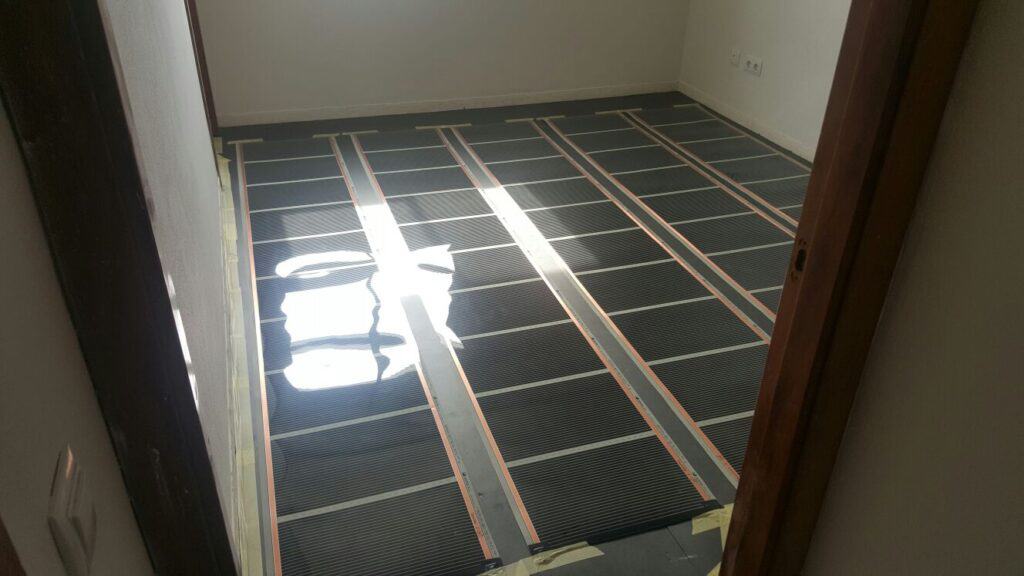
Underfloor heating is fast becoming a preferred method of warming homes across Malta due to its energy efficiency, aesthetic benefits, and even heat distribution. Among the available systems, underfloor heating sheets are an innovative solution, especially popular for retrofit projects and energy-conscious builds. But before installation, there’s one critical question that must be answered:
What is the underfloor heating sheet compatibility with floor types?
Understanding compatibility ensures maximum performance, safety, and long-term reliability of your heating system. In this guide, we’ll explore how underfloor heating sheets interact with various floor materials, what works, what doesn’t, and how to make the right choice. Whether you’re renovating or building from scratch, this will save you both money and headaches.
Let’s dive in!
✅ Why Compatibility Matters in Underfloor Heating Installations| Underfloor Heating Sheet Compatibility with Floor Types
The underfloor heating sheet compatibility with floor types isn’t just a minor detail—it’s a crucial factor that determines the success of the entire system. Not all floors conduct heat equally. Some insulate too much, some expand under heat, and others might even get damaged when exposed to prolonged warmth.
Mismatched flooring can cause:
Uneven heating and cold spots
Reduced system efficiency
Damage to floor finishes
Shortened lifespan of both floor and heating sheet
In Malta’s climate, where winter temperatures dip but never plummet, optimizing heat output without wasting energy is essential. Heating sheets that work well with compatible floor types ensure you’re getting your money’s worth—both in comfort and electricity bills.
🪵 1. Best Compatible: Engineered Wood Flooring| Underfloor Heating Sheet Compatibility with Floor Types
Engineered wood is one of the top choices when it comes to underfloor heating sheet compatibility with floor types. Unlike solid wood, which can expand and contract due to heat and humidity, engineered wood has a layered structure that provides better dimensional stability.
Why it works well:
It tolerates moderate, consistent heat.
Allows efficient heat transfer (especially if the top layer is thinner).
Most engineered woods are approved by manufacturers for use with underfloor heating sheets.
Installation tips:
Always confirm with the wood supplier that their product is certified for underfloor heating.
Floating installation with underlay is not recommended; glued-down planks provide better thermal contact.
Bonus Tip: Use boards no thicker than 18mm to allow optimal heat penetration.
💶 Average cost in Malta: €30–€65/m² (plus installation).
🪟 2. Ideal Choice: Ceramic and Porcelain Tiles| Underfloor Heating Sheet Compatibility with Floor Types
Tiles—particularly ceramic and porcelain—are the gold standard when it comes to flooring materials that are perfectly suited to heating sheets. They’re dense, conductive, and don’t warp under heat.
Why they are ideal:
Excellent heat conduction and retention
Resistant to cracking under temperature changes
Work beautifully with thin-profile heating sheets
Perfect for:
Bathrooms, kitchens, and entryways
New builds and retrofits in Malta’s humid coastal areas
Pro Tip: Use a flexible adhesive and grout to accommodate slight thermal expansion.
💶 Average cost in Malta: €15–€50/m² (excluding installation).
🧽 3. Also Compatible: Luxury Vinyl Tiles (LVT) and SPC Flooring| Underfloor Heating Sheet Compatibility with Floor Types
The new generation of LVT (Luxury Vinyl Tile) and SPC (Stone Polymer Composite) floors are surprisingly compatible with underfloor heating sheets—if you choose the right kind.
Compatibility check:
Product must be rated for underfloor heating use (usually stated on packaging or product datasheet).
Maximum floor surface temperature should not exceed 27°C to prevent damage.
Why homeowners in Malta love it:
Budget-friendly and waterproof
Available in stylish wood or stone-look designs
Great for apartments and small spaces
Important: Avoid cheap vinyl that contains adhesives or materials prone to melting or releasing fumes under heat.
💶 Average cost in Malta: €20–€40/m².
🚫 4. Avoid These: Solid Hardwood and Laminate Flooring| Underfloor Heating Sheet Compatibility with Floor Types
Now for a cautionary tale. While solid hardwood flooring is stunning, it scores poorly in terms of underfloor heating sheet compatibility with floor types. Similarly, standard laminate flooring can pose issues.
Why solid wood is a no-go:
Prone to expansion and contraction
Can warp or crack from heat exposure
Not cost-effective due to high risk of damage
Why laminate is risky:
Often has a foam underlay that acts as an insulator (blocking heat)
Low-quality boards may delaminate
If you’re absolutely set on the look of wood, engineered timber or LVT will give you the aesthetic you want—without the drawbacks.
🔍 Understanding Floor Covering Thickness and Tog Values| Underfloor Heating Sheet Compatibility with Floor Types
A crucial but often overlooked factor in choosing the right flooring is its thermal resistance, measured in Tog values. The higher the Tog, the more insulation it provides—which is bad news for heat transfer.
General rule for heating sheets:
Total Tog rating (underlay + floor) should be below 2.5 for effective performance.
Flooring Tog values (approximate):
Ceramic tile: 0.01
Engineered wood: 1.0–1.5
LVT: 0.2–0.5
Carpet: 1.5–2.0
Laminate: 1.5–2.2
Always check this number before purchase or ask your supplier.
🧱 Subfloor Preparation: The Unsung Hero of Compatibility| Underfloor Heating Sheet Compatibility with Floor Types
Even with compatible materials, the success of your system also depends on the subfloor condition. If the subfloor is uneven, poorly insulated, or damp, it can affect the heating sheet’s performance and longevity.
Checklist for Malta homes:
Concrete subfloors should be smooth and dry (below 75% RH).
Add insulation boards to improve efficiency and reduce heat-up time.
For retrofits, use decoupling membranes where needed.
Proper subfloor prep = better comfort + lower energy bills.
🧼 Cleaning and Maintenance Considerations by Floor Type| Underfloor Heating Sheet Compatibility with Floor Types
Some floor materials handle cleaning better than others, and this matters when warm surfaces attract dust or spills.
Ceramic/Porcelain Tiles:
Easy to mop; doesn’t stain easily
Suitable for high-traffic, spill-prone areas
Engineered Wood:
Use a damp mop (not wet)
Avoid harsh chemicals
LVT/SPC:
Great resistance to stains
Easy to vacuum and mop
Keeping your heated floor clean not only enhances its longevity but ensures consistent heat distribution too.
⚙️ Installation Compatibility with Floor Systems| Underfloor Heating Sheet Compatibility with Floor Types
While the underfloor heating sheet compatibility with floor types is critical, so is the installation method:
| Floor Type | Suitable with Heating Sheets | Recommended Installation Type |
|---|---|---|
| Ceramic/Porcelain | ✅ Yes | Thinset over sheets |
| Engineered Wood | ✅ Yes | Glue-down |
| LVT/SPC | ✅ Yes | Click-lock or glue-down |
| Solid Hardwood | ❌ No | Not recommended |
| Laminate | ⚠️ With caution | Must be certified + glued |
For guaranteed results, we always recommend working with professionals experienced in underfloor heating systems.
💬 Want to Know What Floor Is Best for Your Project?| Underfloor Heating Sheet Compatibility with Floor Types
Every space is unique—what works in a Valletta flat might not suit a Gozo farmhouse. If you’re unsure about which floor to choose or how to proceed with installation, we’re here to help. Our team specializes in underfloor heating sheet projects tailored to Maltese properties and regulations.
You can contact us here to get personalized advice, quotes, or to book a site visit.
👉 Check Out Our Service in Malta| Underfloor Heating Sheet Compatibility with Floor Types
Ready to upgrade your flooring and heating all in one go? Explore our specialized service for underfloor heating sheets in Malta and see how we can bring comfort and innovation to your space.
🔗 Learn More
Curious about the basics of underfloor heating and how it works? Wikipedia offers an excellent overview of how this low-energy, high-comfort solution has evolved over time.
🧸 5. Can You Use Carpet with Underfloor Heating Sheets?| Underfloor Heating Sheet Compatibility with Floor Types
Yes—but with careful planning. While carpet might not be the first material that comes to mind when thinking of heating systems, it can work—provided you understand the limits of underfloor heating sheet compatibility with floor types.
What makes carpet a challenge?
Insulation effect: Carpet acts as an insulator, which means it can block heat from reaching the surface effectively.
Tog rating limitations: As mentioned earlier, the total Tog value (including underlay and carpet) should not exceed 2.5. Many standard carpets exceed this value.
Longer heat-up time: Thicker carpets slow down the system’s responsiveness, which isn’t ideal if you want quick heat delivery.
How to make carpet work:
Choose low-pile carpets made from materials like nylon or polypropylene.
Pair them with low-tog underlays specifically designed for underfloor heating (look for ones with Tog < 0.5).
Confirm both carpet and underlay are certified for use over underfloor heating sheets.
💶 Cost in Malta: €10–€30/m² for carpet, €5–€15/m² for underlay.
🚿 Underfloor Heating Sheets in Bathrooms and Wet Areas| Underfloor Heating Sheet Compatibility with Floor Types
Bathrooms are one of the most popular spaces in Malta for underfloor heating sheets—and for good reason. No one enjoys stepping out of the shower onto a cold tile floor!
But moisture, humidity, and safety are big concerns. So how does underfloor heating sheet compatibility with floor types play out in wet zones?
Compatible flooring options for bathrooms:
Porcelain tiles – Water-resistant and durable
Stone tiles – Excellent heat retention (though more expensive)
SPC flooring – 100% waterproof, budget-friendly
Important installation notes:
Always use waterproof membranes beneath heating sheets in wet areas.
Employ flexible tile adhesives and grout to absorb expansion.
Avoid using vinyl or laminate that isn’t explicitly water- and heat-rated.
💧 Pro tip: Use a smart thermostat with a floor probe to maintain precise temperature levels and avoid overheating in small enclosed areas.
🧱 Moisture Barriers and Insulation Boards: Hidden But Crucial| Underfloor Heating Sheet Compatibility with Floor Types
When evaluating underfloor heating sheet compatibility with floor types, it’s not just the top surface that matters. What’s beneath is equally important—especially in Malta, where rising damp in older stone homes can be an issue.
Why moisture barriers matter:
Prevents humidity from reaching electrical components
Extends lifespan of both floor and heating system
Helps preserve subfloor integrity
Types of subfloor insulation boards:
Extruded Polystyrene (XPS): Lightweight, waterproof, great thermal performance
Cement-coated insulation boards: More rigid and durable, ideal for tiled floors
Fibre-reinforced boards: Good for areas with uneven subfloors
Installation tips:
Boards must be glued or screwed to a clean subfloor.
Always tape joints between boards to maintain a vapor seal.
💶 Typical cost: €10–€20/m² (plus labor).
🧰 Advanced Tips for Better Floor Compatibility| Underfloor Heating Sheet Compatibility with Floor Types
Want to get the most out of your underfloor heating investment? Here are some expert recommendations that go beyond material selection:
1. Use Floor Probes
Most modern thermostats come with a floor probe sensor, which ensures the heating sheet operates within the safe limits of your floor type. This is especially important for wood and vinyl surfaces that may degrade if overheated.
2. Plan for Expansion Gaps
Floating floors (like SPC or engineered wood) must be allowed to expand and contract. Always leave a perimeter expansion gap and avoid sealing these with rigid materials.
3. Minimize Rugs and Furniture with No Clearance
Thick rugs and immobile furniture block radiant heat. Choose breathable rugs and furniture with legs to allow airflow and even warmth distribution.
4. Consider Smart Zoning
In larger homes or open layouts, installing multiple heating zones allows you to optimize energy use by heating only the spaces you’re using.
🧯 Safety Considerations for Floor Compatibility| Underfloor Heating Sheet Compatibility with Floor Types
Even when materials are compatible, incorrect installation can lead to electrical hazards, warping, or heat loss. Here are a few non-negotiable safety practices:
Certified Products Only
Make sure your underfloor heating sheet system and chosen flooring are CE certified and suitable for use together.
Professional Installation
In Malta, it’s legally required that underfloor heating systems be installed by certified technicians. A DIY install can void warranties and create insurance issues in the event of damage or fire.
Avoid Piercing the Heating Mat
During floor installation (especially tiles), ensure installers avoid puncturing the heating sheet with screws or nails. Any damage must be repaired before covering the system.
🏡 Real-World Example: Sliema Apartment Renovation| Underfloor Heating Sheet Compatibility with Floor Types
To show you how this works in practice, here’s a real-world example:
Property Type: Two-bedroom apartment in Sliema
Floor Type: Engineered wood in bedrooms, porcelain tiles in living/dining/kitchen
Challenge: Needed a heating solution that was energy-efficient and aesthetically modern without compromising the current floor levels
The Solution:
Used ultra-thin heating sheets (only 3mm thick) under both tile and engineered wood
Added XPS insulation boards for faster heat-up time and reduced energy use
Integrated a smart thermostat with zoning between bedroom and living areas
Results:
35% reduction in heating bills over two winters
Sleek finish with no visible radiators or units
Enhanced property value (confirmed by realtor at time of listing)
🔧 Choosing the Right Combo for Your Home| Underfloor Heating Sheet Compatibility with Floor Types
Let’s wrap up by summarizing the best pairings for underfloor heating sheet compatibility with floor types in Malta:
| Floor Type | Compatible | Performance | Recommended Rooms |
|---|---|---|---|
| Ceramic/Porcelain | ✅ Yes | ★★★★★ | Kitchen, bathroom, hall |
| Engineered Wood | ✅ Yes | ★★★★☆ | Bedrooms, living room |
| LVT/SPC | ✅ Yes | ★★★★☆ | Bedrooms, flats, offices |
| Carpet | ⚠️ Limited | ★★☆☆☆ | Bedrooms only (low Tog) |
| Solid Hardwood | ❌ No | ★☆☆☆☆ | Not recommended |
| Laminate (standard) | ⚠️ Limited | ★★☆☆☆ | Must be heating-rated |
📞 Still Unsure? Let’s Talk Flooring and Heating Solutions| Underfloor Heating Sheet Compatibility with Floor Types
If you’re still on the fence about which floor to go with or how to ensure compatibility with underfloor heating sheets, we’re happy to help. With years of experience installing systems across Malta—from new builds in Mosta to renovations in Valletta—we can guide you every step of the way.
👉 Contact us today for a no-pressure consultation or to request a quote.
🔧 Explore Our Underfloor Heating Services| Underfloor Heating Sheet Compatibility with Floor Types
Looking for a team that knows how to make your heating dreams come true? We specialize in underfloor heating sheets in Malta for homes, offices, and renovation projects.
From material sourcing to certified installation, we’ve got you covered—efficiently and affordably.
Final Word:
The success of your underfloor heating system doesn’t just depend on the quality of the heating sheets—it hinges on the compatibility with your floor type. Get this right, and you’ll enjoy warm, energy-efficient spaces for years to come.