
If you’re diving into a flooring or renovation project, chances are you’ve heard the term screed concrete tossed around by contractors, suppliers, or on material lists. But what is screed concrete, really? And why is it such a crucial part of construction projects across Malta—from private villas in Mellieħa to commercial developments in Sliema?
Let’s break it down in clear, no-nonsense terms so you not only understand it—but know when, where, and why to use it. Whether you’re planning a home renovation, managing a turnkey construction project, or just curious, this guide will demystify screed concrete and show you how to make smart flooring decisions.
✅ What Is Screed Concrete? (Here’s the Straight Answer)| What Is Screed Concrete
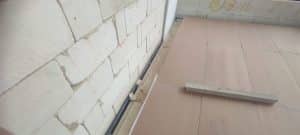
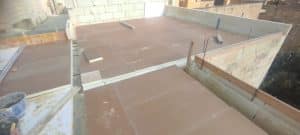
Screed concrete is a thin layer of cementitious material laid over a base floor—often concrete—to create a smooth, level surface before finishing materials like tiles, vinyl, or microcement are applied. In simple terms, it acts like the “undercoat” of your floors, ensuring everything laid on top looks flawless.
The standard composition includes sand, cement, and water—sometimes with added polymers or fibers for strength and flexibility. It’s typically applied at a thickness between 50 mm and 75 mm, although thinner or thicker screeds are used depending on project needs.
There are two primary types of screed concrete:
Bonded screed: Adheres directly to the substrate.
Unbonded screed: Laid over a damp-proof membrane.
Floating screed: Used over insulation or underfloor heating systems.
So, if you’re asking, what is screed concrete used for?—the answer is: a lot more than you might think.
🧱 Why Screed Concrete Matters in Malta’s Construction Scene| What Is Screed Concrete
Malta’s architecture is a blend of tradition and modernity, and that unique mix brings special requirements to construction. From hot summers to humid coastal air, your flooring system needs to stand up to challenges—and screed concrete delivers.
Here’s why screed concrete is essential in Malta:
1. It Creates a Level Surface for Final Flooring| What Is Screed Concrete
Uneven surfaces are a nightmare for tilers and finishers. Screed ensures a smooth, flat base, reducing the chances of tile lippage or cracks in decorative flooring like microcement.
2. It’s Ideal for Underfloor Heating| What Is Screed Concrete
With more homes and hotels in Malta switching to energy-efficient underfloor heating, floating screed is used to encapsulate and protect heating pipes while allowing heat to radiate effectively.
3. It Improves Structural Integrity| What Is Screed Concrete
When bonded properly, screed acts as a stabilizer for your flooring. It distributes loads more evenly and enhances the floor’s resistance to cracking.
4. It Withstands Humidity and Salt Air| What Is Screed Concrete
By adding water-reducing agents or fibers, screed concrete can be made more resistant to moisture—critical in Malta’s sea-air environment.
💶 What Does Screed Concrete Cost in Malta?| What Is Screed Concrete
Now, let’s talk money.
In Malta, the cost of screed concrete typically ranges between €15 to €30 per square metre, depending on:
Thickness
Type (bonded, unbonded, or floating)
Additives or reinforcements (e.g., polymers, mesh)
Access to the site (e.g., upper-floor pumping)
A standard bonded screed, installed professionally at 50 mm thickness, averages around €18–€22 per sqm, inclusive of material and labour. Floating screeds with insulation or heating layers may cost more—up to €35 per sqm.
At Kibitec, we offer transparent pricing and top-tier screed application services across Malta. Whether it’s a high-end residential space or a commercial showroom, we tailor each project based on site-specific requirements. Contact us here to request a quote or get advice on your flooring system.
🔍 How Screed Differs from Concrete (Yes, They’re Not the Same)| What Is Screed Concrete
A common misconception in Malta’s construction circles is that screed is just thinner concrete. Not exactly.
Let’s clarify the differences:
| Feature | Screed Concrete | Structural Concrete |
|---|---|---|
| Composition | Fine sand + cement + water | Coarse aggregate + cement + water |
| Texture | Smooth and fine | Rough and coarse |
| Use | Flooring layer before finishing | Structural base or framework |
| Thickness | 25mm – 75mm | Typically 100mm+ |
| Strength Requirement | Not for structural load-bearing | Must meet structural load standards |
So while they share components, they serve entirely different purposes. Concrete is the bones of your structure; screed is the skin that makes it beautiful and ready for final finishes.
🛠️ Popular Screed Types Used in Malta (And When to Use Each)| What Is Screed Concrete
Depending on your project, location, and budget, here are the most commonly used screeds across Maltese residential and commercial jobs:
1. Traditional Sand-Cement Screed| What Is Screed Concrete
Most widely used in homes and small businesses.
Requires skilled manual labour to level.
Suitable for thicknesses of 50–75 mm.
Affordable: €15–€22 per sqm.
2. Self-Levelling Screed| What Is Screed Concrete
Flows easily and levels itself.
Best for interior refurbishments where time is limited.
Ideal for microcement finishes or vinyl flooring.
Slightly higher price point: €25–€30 per sqm.
3. Polymer-Modified Screed| What Is Screed Concrete
Enhanced flexibility and reduced shrinkage.
Great for bathrooms or outdoor balconies.
Resistant to water ingress and cracking.
Costs vary based on additives: €28–€35 per sqm.
4. Fibre-Reinforced Screed| What Is Screed Concrete
Mixed with fibres to improve tensile strength.
Minimises cracking during curing.
Popular in garages and high-traffic areas.
Need help deciding which screed suits your build? Check out our screeding service here to explore your options.
🧩 Screed and Turnkey Construction: Where It Fits In| What Is Screed Concrete
In the context of turnkey construction, screeding plays a pivotal role in achieving high-end finishes quickly and efficiently. Since turnkey projects involve delivering a complete, ready-to-use property, a well-laid screed ensures fast installation of tiles, timber, or microcement without costly delays or rework.
A poorly screeded floor? That’s a recipe for disaster—cracks, floor dips, uneven levels, and frustrated clients. That’s why experienced turnkey developers in Malta always prioritise high-quality screeding before interior finishing starts.
👷 How Screed Is Applied: The Process Step-by-Step| What Is Screed Concrete
Understanding how screed is applied can give you confidence in discussing timelines, budgets, and methods with your contractor. Here’s the general workflow:
Step 1: Substrate Preparation
Clean and prime the concrete base.
Apply bonding agents (for bonded screeds).
Step 2: Mixing Screed Material
On-site with mixers or delivered pre-mixed.
Adjust water ratios carefully to avoid cracking or crumbling.
Step 3: Pouring and Leveling
Screed is spread manually or pumped.
Levelled using straightedges or laser guides.
Step 4: Curing
Moisture curing for 5–7 days.
Floor protected with sheeting or membranes.
Step 5: Drying Time
Depending on thickness, it takes 1mm per day to dry under good conditions.
That’s about 28 days for a 30mm screed.
⚠️ Pro tip for Malta homeowners: Always ask about drying time before laying tiles or microcement. Premature installation traps moisture and leads to delamination or mould—especially in Malta’s humid climate.
🧼 Maintenance: Does Screed Concrete Need Care?| What Is Screed Concrete
Screed, once hidden under tiles or flooring, rarely needs direct maintenance. However, if it’s left exposed (for example, in industrial spaces or minimalist designs), you’ll want to:
Seal it to prevent dusting.
Clean regularly with pH-neutral solutions.
Avoid heavy point loads on thin screeds.
🛒 Want to Buy Screed or Hire Experts in Malta?| What Is Screed Concrete
If you’re asking what is screed concrete because you’re planning a renovation, managing a construction site, or comparing quotes—you’re in the right place.
Whether you need to purchase screed concrete or want it professionally installed, Kibitec is here to help. We supply and apply premium screed solutions across the island with full project support.
👉 Contact us here to request a quote or get personalised guidance.
⚠️ Common Screed Problems in Malta (And How to Avoid Them)| What Is Screed Concrete
Even though screed concrete is a reliable and versatile material, it’s not immune to problems—especially if shortcuts are taken. In Malta’s demanding climate and fast-paced construction industry, here are the most common issues we encounter, along with practical advice on preventing them.
1. Cracking
Cracks usually result from:
Rapid drying
Poor mix ratios
Insufficient curing time
Avoid it by:
Ensuring the right water-to-cement ratio
Using curing agents or covering the screed with polythene sheeting
Allowing adequate drying time before installing final finishes
2. Curling or Warping
When screed dries unevenly, it can lift at the edges—causing curling.
Avoid it by:
Applying consistent screed thickness
Maintaining stable temperature and humidity during drying
Using mesh reinforcement or fibres to stabilise the mix
3. Debonding
In bonded screeds, poor adhesion can lead to sections lifting from the substrate.
Avoid it by:
Thoroughly cleaning the base
Applying bonding slurry or primers
Using mechanical anchoring where necessary
4. Dusting
This happens when the surface wears away, leaving a fine powder.
Avoid it by:
Proper sealing
Avoiding excessive water in the mix
Using polymer-modified screeds for greater surface strength
At Kibitec, we tackle these issues before they arise by using advanced materials, skilled technicians, and precise curing processes tailored to Malta’s climate. Contact us if you want screed done right the first time.
🌱 Is Screed Concrete Eco-Friendly?| What Is Screed Concrete
Great question—especially if you’re working toward a more sustainable build.
Traditional screed concrete does have a carbon footprint due to its cement content. However, modern screed technology is evolving, and greener solutions are now available in Malta:
✅ Eco-Friendly Options Include:
Low-carbon cement replacements like ground granulated blast furnace slag (GGBS)
Recycled aggregates
Self-levelling screeds that reduce material waste
Some companies, including Kibitec, also aim to source locally produced materials, lowering emissions associated with transport. And since screed can be laid thinner than full concrete slabs, it requires less raw material overall.
If sustainability is part of your turnkey construction goals, screed concrete can absolutely play a role—especially when used smartly with insulating layers that boost energy efficiency and reduce long-term energy bills.
💡 FAQs: Everything You Wanted to Know About Screed Concrete| What Is Screed Concrete
Still wondering if screed is right for your project? Let’s run through the most common questions Maltese homeowners, builders, and developers ask:
❓ Can you lay tiles directly on screed?
Yes, but only once the screed is fully cured and moisture levels are safe (less than 75% relative humidity). Use tile adhesives compatible with cementitious substrates.
❓ How long does screed take to dry in Malta?
Expect about 1 mm per day under normal conditions. So a 50 mm screed will take at least 50 days. Warm, breezy Maltese summers may speed up drying—but always confirm with a moisture test.
❓ Can I use screed for outdoor areas like balconies?
Absolutely—but use polymer-modified or fibre-reinforced screed for added water resistance and durability. And make sure proper slope drainage is in place.
❓ Is screed concrete waterproof?
Not by default. Standard screed is not waterproof, but additives and sealants can improve its water resistance. For bathrooms and wet rooms, use waterproof membranes in combination with screed.
❓ Can screed be coloured or exposed like polished concrete?
Yes, decorative screed finishes exist, though they require special preparation, sealing, and polishing. These are popular in minimalist interiors or industrial-style restaurants around Valletta and St. Julian’s.
📋 Summary: Why Screed Concrete Deserves a Spot in Your Next Project| What Is Screed Concrete
Let’s recap the key points:
✅ Screed concrete is the critical layer between your structural slab and your final flooring.
✅ It ensures levelness, stability, and smoothness, which is essential for tiles, microcement, wood, or vinyl.
✅ In Malta, screed is especially valuable due to humidity, floor heating trends, and architectural diversity.
✅ Types vary: bonded, unbonded, floating, fibre-reinforced, self-levelling—you choose based on your needs.
✅ It’s cost-effective, typically €15–€35 per sqm, and environmentally adaptable.
✅ With expert installation, it supports durable, beautiful, and crack-free floors for years.
📞 Contact Us to Get Screed Concrete Done Right in Malta| What Is Screed Concrete
Still asking what is screed concrete? The answer may be more exciting than you thought—it’s the secret sauce to a durable, smooth, and flawless flooring system. And when done right, it’s nearly invisible—but completely essential.
Ready to transform your floor with precision screeding?
👉 Contact Kibitec now for expert advice, tailored quotes, or to book a site visit. We provide screed concrete installation services all over Malta—fast, reliable, and finished to perfection.
🔨 Check Out Our Screeding Service| What Is Screed Concrete
Whether you’re building new, renovating old, or managing a commercial fit-out, screed is an essential step—and you want it done professionally.
👉 Check out our screeding service here to explore your options, pricing, and technical details. We’re proud to offer cutting-edge screed solutions for all project sizes and styles.
🏁 Final Thoughts| What Is Screed Concrete
Screed concrete might not get as much attention as marble countertops or stylish tile patterns—but don’t underestimate its importance. It’s what makes all those final finishes possible. So next time you’re on a job site, walking through a showroom, or admiring a villa in Gozo, remember: beneath every beautiful floor is a well-laid screed doing the hard work.
And if you’re ready to get started? We’re just a click away. Reach out here.